Georgia: Chiatura Soviet Cradles
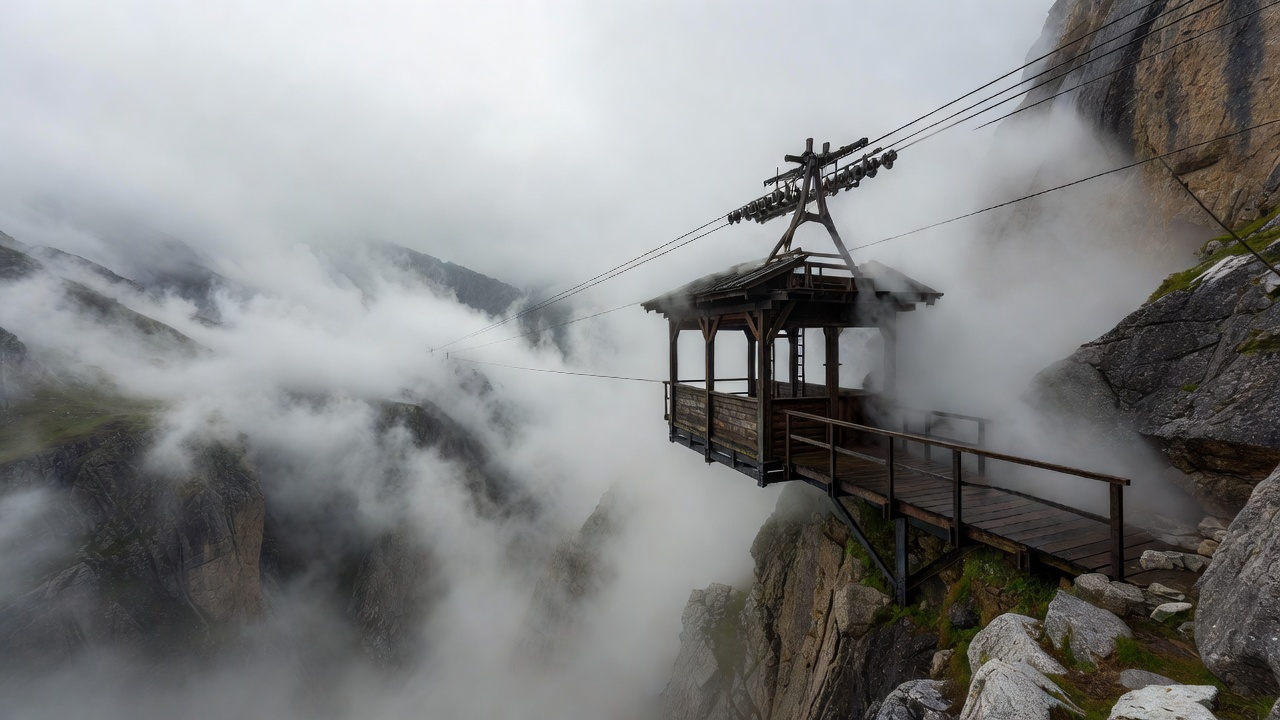
Nestled deep within the limestone gorges of the Kvirila River in Western Georgia lies Chiatura. In the late 19th and early 20th centuries, this quiet riverbed community became the epicenter of the world’s manganese supply, yielding more than 60 percent of global reserves. However, the ore seams sat high atop vertical plateau ridges up to 300 meters above the workers' housing down in the canyon.
The Aerial Boom of 1954
Tired of workers wasting three hours each morning climbing crude cliff staircases, Soviet planners commissioned engineer G. Metreveli in 1953 to construct a radical urban transport solution: a web of point-to-point passenger and freight ropeways radiating outward from the town center up into every residential bluff and mine adit.
The Malatesta & 'Kanatka' Mechanisms
Locally nicknamed kanatki (from the Russian word for rope), these cableways were masterpieces of utilitarian ironwork. Unlike Western systems that relied on complex electric safety interlocks, the early Chiatura lines utilized robust, counterbalanced mechanical brakes:
- Fixed-Track Jig-Back: Two cars operated in balance, meeting midway across the chasm with no intermediate towers on several lines.
- Terminal Lever Grips: Operators managed line tension via hand-cranked calipers and iron flywheels directly connected to local hydro-electric grids.
- Direct Mine Ingress: Several cable car terminals were built directly into mine mouth shaft openings, transporting miners from town square to ore bed without touching gravel roads.
The Modern Modernization Initiative
After operating continuously for over sixty years without major structural overhauls, the classic vintage iron cabins were formally retired in 2016 due to metal fatigue. In 2021, the Georgian government and European ropeway engineers opened an ultra-modern four-line hub station in central Chiatura, restoring this aerial mountain lifeline with modern bi-cable safety brakes, optical fiber telemetry, and automated weather monitoring.